What Is Ecommerce Fulfilment and How Does It Work?
Ecommerce fulfilment is the process of storing, picking, packing and shipping products to customers after an order is placed online.
It plays a key role in how online businesses operate, directly affecting delivery speed, accuracy and customer experience.
This guide explains how ecommerce fulfilment works, what it includes and how businesses manage it as they grow.
What Is Ecommerce Fulfilment?
This process refers to the complete handling online orders, from storing stock through to delivering products to customers.
It includes several key stages that work together to ensure orders are processed accurately and delivered on time.
While some businesses manage fulfilment in-house, others use third-party logistics (3PL) providers to handle these operations more efficiently.
How the Fulfilment process Works
The fulfilment process typically follows a structured workflow, helping online businesses manage orders efficiently.
Receiving and Storing Inventory
Suppliers deliver products to a storage location, such as a warehouse or fulfilment centre, where they are organised and stored ready for orders.
Order Processing
When a customer places an order, the details are received through an ecommerce platform or system and prepared for fulfilment.
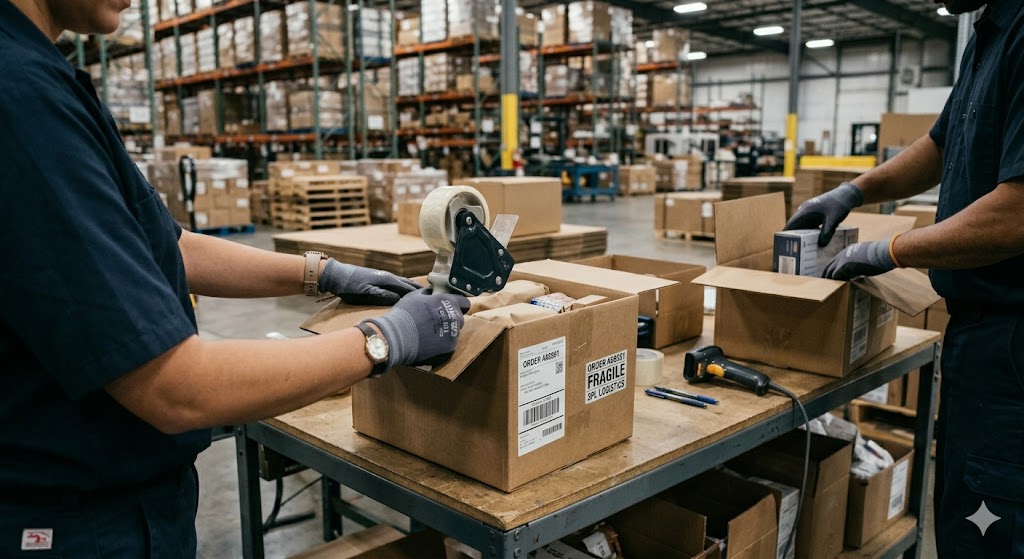
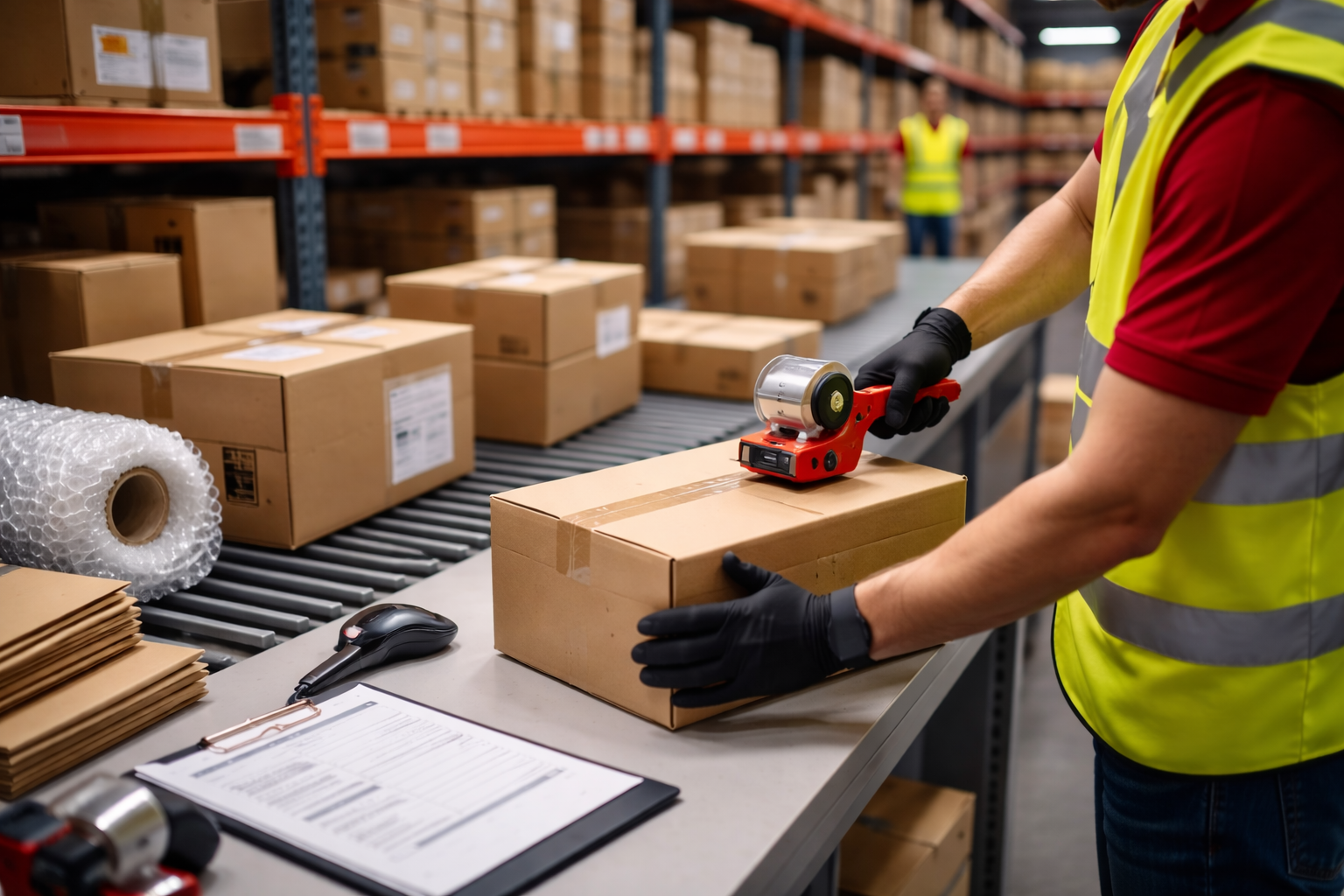
Picking and Packing
Warehouse staff pick items from storage and carefully packed to ensure they arrive safely and in good condition.
Shipping and Delivery
Orders are despatched using courier networks who then deliver to customers across the UK or internationally.
Returns Handling
Teams receive, check and process returned items, ensuring stock levels remain accurate.
In-House vs Outsourced Fulfilment
Ecommerce businesses can choose to manage fulfilment internally or outsource it to a third-party logistics provider.
In-house fulfilment offers direct control but can become time-consuming and difficult to scale as order volumes grow.
Outsourced fulfilment allows businesses to rely on specialist providers to manage storage, packing and shipping, helping improve efficiency and scalability.
What Does a Fulfilment Provider Do?
A fulfilment provider manages the operational side of ecommerce logistics, including storage, order processing and delivery.
This allows businesses to focus on sales, marketing and growth while ensuring orders are handled efficiently.
This is particularly important for online businesses in the UK managing growing order volumes and customer expectations.
If you are exploring options, you can learn more about our ecommerce fulfilment services.
When Do Businesses Need Fulfilment Support?
Many businesses begin by managing fulfilment themselves. However, as order volumes increase and operations become more complex, fulfilment can become more difficult to manage.
At this stage, businesses often review their options and consider working with a fulfilment partner to support growth.
Businesses considering outsourcing can read our guide on when to outsource ecommerce fulfilment.
Fulfilment for Growing Ecommerce Businesses
Order fulfilment plays a critical role in supporting business growth. Efficient processes, accurate order handling and reliable delivery all contribute to a better customer experience.
As a result, as businesses scale, having the right fulfilment setup becomes increasingly important for maintaining performance and meeting customer expectations.
Businesses looking to scale can explore our ecommerce fulfilment services to understand how outsourcing can support growth.
Looking for Fulfilment Support?
Speak to our team about your ecommerce fulfilment requirements and find out how we support growing online businesses.